

Justice · Media · Systemic Racial Profiling
In this country, certain forms of violence dominate the public arena. Others, although judged more serious, remain on the margins. And this gap is not accidental — it reveals something precise about the way we collectively manufacture the idea of the criminal.
According to the Department of Justice Canada and several national surveys, violence against children is consistently identified as the crime Canadians find most disturbing. It is, morally speaking, the strongest point of consensus. Yet it is not the one that structures our collective imagination of crime.
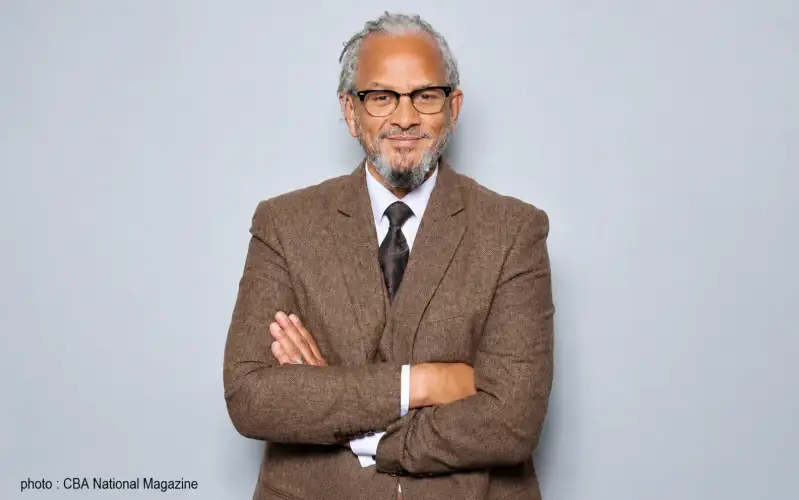
Our contributor Alain Babineau — McGill-trained jurist and former RCMP staff non-commissioned officer — dismantles a rarely-named mechanism: why some crimes are explained by culture, community, or "milieu," while others, although more morally condemned, remain strictly individualized.
I — The Starting Point
Outrage on a Variable Scale
Cases of child sexual exploitation — particularly online — are on the rise in Canada. Survey after survey, this is the crime the population finds the most morally intolerable. One would expect, then, that the criminal and media response would match this consensus.
Yet the figures tell a different story. Conviction rates remain below average. Sentences are often relatively short. And media attention remains limited, scattered, rarely structuring.
More still: in R. v. Gagnon, 2026 QCCA 583, the Quebec Court of Appeal struck down certain mandatory minimum sentences and instead imposed conditional sentences, despite the seriousness of the offences charged. It is a technically defensible decision, consistent with a familiar judicial logic: nuance, proportionality, individualization.
And it is precisely that logic — nuance, proportionality, individualization — that disappears elsewhere.
II — The Shift
When Crime Becomes a Culture
In dominant media coverage of racialized gangs, the framing changes radically. The headlines speak for themselves.
Three recent headlines
"Montreal gangs want to unite to stand up to the Hells Angels" — Le Journal de Montréal, May 16, 2024.
"Gangs vs. bikers: a turning point in the history of crime" — Le Journal de Montréal, December 19, 2024.
"Young people recruited earlier and earlier into criminal networks" — TVA Nouvelles / Journal de Montréal, coverage 2024–2026.
Here, crime is no longer merely described. It is structured as a collective phenomenon: cultural, territorial, generational. We are no longer simply talking about criminal acts committed by identifiable individuals. We are talking about criminogenic milieus.
The shift is subtle but decisive. It transforms a series of offences into an identity narrative — and, in so doing, it constructs the image of a community to be monitored.
III — The Mechanism
Pathologizing Families, Blaming Culture
One of the most striking shifts is the pathologization of racialized families. In several media accounts, parents are described as absent or overwhelmed, families as disorganized, delinquency as the natural product of deficient supervision.
At the same time, violence is attributed to culture, to the music being listened to, to "social codes" presented as specific to a group. Crime then becomes a cultural expression.
In some neighbourhoods, violence is explained by culture, integration, "values." In other settings, it is attributed to mental health, stress, exceptional circumstances. Same potential gravity. Two different narratives.
— Alain Babineau, JD/BCLThis asymmetry is not innocuous. It organizes, before any analysis even begins, who deserves nuance and who deserves generalization.
IV — The Historical Blind Spot
Biker Groups: A Telling Counter-Example
This contrast becomes all the more striking when we consider the historical presence of criminalized biker groups in Quebec. For decades, organizations such as the Hells Angels have been recognized by police services as among the most structured, influential, and dangerous criminal groups in the country. Their involvement is extensively documented in drug trafficking, organized violence, and the control of criminal economic territories.
These groups have also historically recruited young people — predominantly from the francophone "Québécois de souche" community — into their networks.
And yet.
What was never said
Their presence has never been explained by a "Quebec culture." It has never been attributed to a failure of "old-stock" families. It has never been used to construct a moral panic targeting that entire population.
These groups are described as organizations, networks, criminal actors. But never as the product of a cultural group to be monitored.
V — The Refusal of the Systemic
A Case Law That Acknowledges It, A Public Discourse That Denies It
This two-tiered framing persists despite an increasingly clear judicial recognition of the structural biases that run through the system. The courts, for their part, have done the work.
What Canadian law already recognizes
R. v. Le, 2019 SCC 34 — The Supreme Court of Canada recognizes the existence of systemic racial profiling and its impact on the analysis of detention under the Charter.
Viens Commission, 2019 — The Public Inquiry Commission on relations between Indigenous Peoples and certain public services in Quebec documents systemic discrimination.
Luamba v. Quebec (Attorney General), 2022 QCCS 3869 — The Superior Court strikes down random traffic stops without grounds, due to their discriminatory effect.
Lamontagne v. Montréal (City of), 2020 QCCS 1234 — Decision concerning police street checks by the SPVM.
Gueye v. Attorney General of Quebec, 2023 QCCS 1456 — Class action against 11 police services and the Sûreté du Québec.
And yet, in public discourse, raising the systemic is still regularly presented as an excuse — as a way of relieving individuals of responsibility. This presentation is convenient. It allows analysis to be replaced by blame.
But it does not stand up to a reading of the decisions. The systemic does not erase the individual: it illuminates the context. Refusing this light is choosing to judge without looking.
VI — The Contrast We Refuse to See
When the Numbers Produce No Discourse
While certain communities are associated in public discourse with criminality, the most morally condemned crimes — those against children — escape any collective logic.
They are neither culturalized. Nor associated with a community. Nor used to construct a moral panic.
And yet, the data are public. According to Statistics Canada, the majority of persons convicted of sexual offences against children are white — approximately 70 to 80%.
This statistical reality produces no discourse on a "culture," a "milieu," or a "social crisis." Why? Because it does not allow for the designation of an "other."
— Alain Babineau, JD/BCLVII — The Right Question
Why Explain Some Collectively, and Others Individually?
This imbalance feeds a well-documented sociological dynamic: moral panic. Media amplification. Simplification of issues. The opposition between "them" and "us." The structure is familiar. What changes from one era to the next is only the target.
The question is often asked: who needs to be watched more closely? But this question rests on a fundamental error. Crime is not a property of any group. It runs across all classes, all cultures, all institutions.
The real question is: why are some forms of criminality explained collectively, while others are systematically individualized?
— Alain Babineau, JD/BCLUntil that question is asked — not as accusation, but as a demand for intellectual honesty — the public narrative will continue to mark certain bodies as dangerous, and exonerate others by default.
Conclusion
A Justice Shaped by the Narrative
Justice is not built only in the courts. It is also built in the media, in political discourse, in the collective stories we tell ourselves about who commits crime, and why.
As long as some forms of violence are amplified and culturalized, while others — although judged more serious — remain strictly individualized, our understanding of crime will remain biased.
And our responses will be biased too.
Original document
Original letter from the author — available for download
This article is also available in its original version, as written and signed by Alain Babineau.
Information as leverage. Access to justice for all.
Justice-Quebec.ca · Together, we go further
Editorial note. This article reproduces the analysis and thought of Alain Babineau, JD/BCL, drawn from an original text signed by the author. Justice-Quebec.ca is an independent citizen-led platform of legal journalism.
The opinions expressed in this article are those of the author. They do not constitute legal advice. For any personal question, please consult a member of the Quebec Bar.
- Le Journal de Montréal, "Organized Crime: Montreal Gangs Dream of Forming an Alliance to Stand Up to the Hells Angels," May 16, 2024.
- Le Journal de Montréal, "Gangs vs. the Hells Angels: A Turning Point in Quebec's Crime History," December 19, 2024.
- TVA Nouvelles / Journal de Montréal, coverage of the recruitment of minors and "turf wars," 2024–2026.
- Public Safety Canada, reports on organized crime and criminalized biker groups.
- Statistics Canada, profiles of sexual offenders against children.
- Public Inquiry Commission on Relations between Indigenous Peoples and Certain Public Services in Québec: Listening, Reconciliation and Progress (Viens Commission), Final Report, Quebec, 2019.
- R. v. Le, 2019 SCC 34.
- Luamba v. Quebec (Attorney General), 2022 QCCS 3869.
- Lamontagne v. Montréal (City of), 2020 QCCS 1234.
- Gueye v. Attorney General of Quebec, 2023 QCCS 1456.
- R. v. Gagnon, 2026 QCCA 583.
This article is a signed analysis by Alain Babineau, published by Justice-Quebec.ca, an independent citizen-led platform. It does not constitute legal advice.
Ajouter un commentaire
Commentaires