

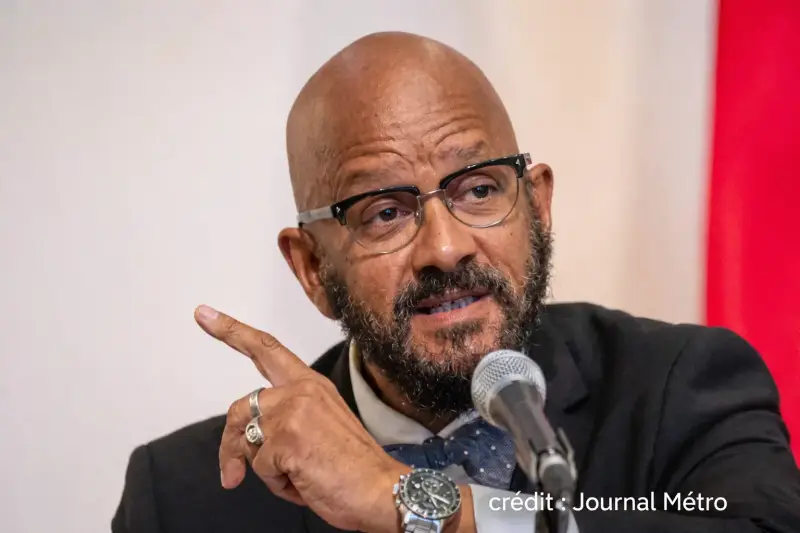
By Alain Babineau, JD/BCL — Contributor, Justice-Quebec.ca · April 2026
For his first contribution to Justice-Quebec.ca, our contributor Alain Babineau tackles a pressing issue in Quebec’s public debate.
As the CAQ and the PQ call for a provincial law to sanction insults against police officers, our contributor — a McGill-trained jurist and former RCMP Staff Sergeant — examines fifteen years of municipal case law. What he finds should concern anyone who cares about equality before the law: citizens acquitted when they contest, convicted when they fail to appear, and constitutional rights that depend on one’s postal code.
This article inaugurates our new bilingual section devoted to racial profiling, systemic discrimination and civil rights. It embodies exactly what we wanted to offer our readers: rigorous, signed analysis, grounded in law and in lived experience.
↓ Signed PDF version available at the end of the article
The CAQ and PQ motion calling for a law against insults toward police officers raises a fundamental question: who really benefits from these regulations, and at what cost to constitutional rights?
In Quebec, municipal by-laws sanctioning « incivilities » have proliferated over the past two decades. Their apparent objective is commendable: to maintain order and respect in public space. But it is by examining their actual application, particularly in light of revealing case law, that their deeply problematic character emerges.
Documented systemic discrimination
The Quebec Commission des droits de la personne et des droits de la jeunesse (CDPDJ) has clearly established1 that most incivility by-laws are neutral on their face, but it is their targeted application that opens the door to discrimination in the form of social profiling. Thus, a by-law requiring pedestrians to cross at traffic lights is not discriminatory in itself — except when it is systematically applied to homeless people.
These regulations disproportionately affect those who have no choice but to live in public space. The nighttime closure of parks in Montreal’s Ville-Marie borough is the starkest example: the CDPDJ concluded that this measure infringed the fundamental rights of the homeless and recommended its repeal. The Ligue des droits et libertés — Quebec Section has for its part denounced the futility of this over-judicialization for social reintegration and its exorbitant costs to the justice system.2
The vast majority of recipients of these tickets never contest them.
The case law analyzed below demonstrates that when they do contest, they are often acquitted.
The fine paid without contestation is therefore frequently a penalty inflicted on someone who had the right to do what they were doing.
The offence of insulting a police officer: arbitrariness as a system
These problems reach their peak in by-laws prohibiting insults to peace officers, which exist in several Quebec municipalities: Laval, Lévis, Québec City, St-Lin-Laurentides, Les Collines-de-l’Outaouais. Their proliferation is the very ground on which the CAQ and PQ wish to build a provincial law.
The case law reveals the radical imprecision of these offences. Four decisions are particularly illuminating.
In Lévis (Ville de) c. Cloutier Lachance3, a citizen absent from the hearing was fined $150 for posting an insulting message on the personal Facebook page of an officer after the latter had issued him a ticket:
« jvoulait juste te remercier pour les tickets de l’autre fois !! criss de trou de q !!!!!!! »
Lévis (Ville de) c. Cloutier Lachance, 2011 QCCM 22, para. 3Judge Ouellet found that the insults were directed at the officer in the exercise of his duties, which was sufficient to establish the offence.
Four years later, in St-Lin-Laurentides (Ville de) c. Blais5, Judge Brochu acquitted a citizen for nearly identical facts — insulting remarks posted on Facebook after a police intervention — explicitly refusing to follow Judge Ouellet’s reasoning:
« with respect, I cannot endorse Judge Ouellet’s opinion »
St-Lin-Laurentides (Ville de) c. Blais, 2015 QCCM 36, para. 12She held that insults published after the fact resemble defamation and fall under civil liability, not municipal penal law. This unresolved divergence between two courts of the same jurisdiction perfectly illustrates the arbitrariness: a citizen’s guilt depends on the municipality in which he lives and the judge who hears his case.
In Ville de Québec c. Valiquette7, a protester convicted for giving the middle finger to riot police during a demonstration illustrates a further concern: the insult offence is one of strict liability, meaning the citizen cannot even invoke the absence of malicious intent as a defence.
Finally, in Ville de Laval c. Beaudin8, Yvens Beaudin, a Black citizen stopped in circumstances the judge herself qualified as dubious, was issued a ticket for the sole use of the word « racist » directed at an officer during a stop whose motives he did not understand. Judge Chantal Paré acquitted him, holding that telling an officer on duty that he engages in racial profiling and is racist are statements free of the customary rudeness9 and that insults must receive a restrictive interpretation in favour of the citizen, not the officer.10
The judge relied on Switzman v. Elbling and A.G. of Quebec11 to recall that the right to criticize state authority is an essential component of parliamentary democracy.12 Although rendered in the context of the Padlock Act and not incivility by-laws, this ruling was expressly invoked by Judge Paré as the constitutional foundation of the right to criticize the police: its relevance is thus established by the case law itself.
Yet Mr. Beaudin was absent from the hearing and unrepresented by counsel. How many other citizens in the same situation simply paid the fine? This case also raises the spectre of racial profiling in the application of these regulations — a form of race-based discrimination prohibited by section 10 of the Quebec Charter of Human Rights and Freedoms (CQLR, c. C-12).
| Decision | Facts | Verdict | Year |
|---|---|---|---|
| Lévis v. Cloutier Lachance 2011 QCCM 22 |
Insulting message posted on Facebook after a ticket. Citizen absent from the hearing. | Convicted — $150 | 2011 |
| St-Lin-Laurentides v. Blais 2015 QCCM 36 |
Insulting remarks posted on Facebook after a police intervention. Facts nearly identical to the Cloutier Lachance case. | Acquitted | 2015 |
| Québec v. Valiquette 2018 QCCM 309 |
Middle finger directed at riot police during a protest. | Convicted (strict liability) | 2018 |
| Laval v. Beaudin 2019 QCCM 166 |
Black citizen calling an officer « racist » during a stop with dubious grounds. | Acquitted | 2019 |
A provincial law: amplifying the problem
The constitutional fragility of these regulations is acknowledged: the offence of insulting a police officer has not yet been declared unconstitutional, but could be, due to its vagueness, arbitrariness and overbreadth. The Supreme Court established in Montréal (City) v. 2952-1366 Québec Inc.13 that any restriction on freedom of expression must serve a pressing and substantial objective, be proportionate, and minimally impair the protected right (R. v. Oakes14).
Justice Binnie, dissenting, further recalled that the municipal power to prohibit « nuisances » cannot apply to something that « has no harmful character and causes injury to no one ».15 Criticizing a police officer, even crudely, causes no objectively measurable harm to public order.16
Codifying into provincial law the most restrictive position of this contradictory case law would amount to elevating arbitrariness into a legal standard.
— Alain BabineauThis would amplify the already documented discriminatory effects, potentially extend repression to speech on social media, and deprive thousands of citizens who never contest their fines of a constitutional protection to which they are entitled.
If clearly hateful or misogynistic remarks toward police officers deserve sanction, tools already exist: the Criminal Code, in matters of harassment, threats and hate propaganda. What is needed is for legislators to demand one simple thing before legislating: evidence showing that these regulations actually increase civility, rather than serving an institution’s interest in shielding itself from legitimate citizen criticism — the very citizens it is supposed to serve.
A note from the author
The opinions expressed in this article are those of the author.
Alain Babineau, JD/BCL, is a graduate of McGill University’s Faculty of Law and a former Staff Sergeant of the RCMP. He serves as Director of Racial Profiling and Public Safety at Red Coalition Inc. and Director of Advocacy and Francophone Affairs at the Black Class Action Secretariat (BCAS).
Signed PDF version available below
This article is also available as a PDF, as written and signed by Alain Babineau. The document includes all footnotes and hyperlinks to the jurisprudential decisions cited.
Footnotes
- Commission des droits de la personne et des droits de la jeunesse, La judiciarisation des personnes itinérantes à Montréal : un profilage social, Fact Sheet 5 (2009).
- Ligue des droits et libertés — Quebec Section, Contre les règlements municipaux qui punissent les stratégies de survie et l’occupation de l’espace public (2012).
- 2011 QCCM 22.
- Ibid., para. 3.
- 2015 QCCM 36.
- Ibid., para. 12.
- 2018 QCCM 309.
- 2019 QCCM 166.
- Ibid., para. 38.
- Ibid., para. 29.
- [1957] SCR 285.
- Ibid.
- 2005 SCC 62.
- [1986] 1 SCR 103.
- [2005] 3 SCR 141.
- Ibid., para. 150.
Jurisprudential and legislative references
Court decisions
- Lévis (Ville de) c. Cloutier Lachance, 2011 QCCM 22
- St-Lin-Laurentides (Ville de) c. Blais, 2015 QCCM 36
- Ville de Québec c. Valiquette, 2018 QCCM 309
- Ville de Laval c. Beaudin, 2019 QCCM 166
- Montréal (City) v. 2952-1366 Québec Inc., 2005 SCC 62, [2005] 3 SCR 141
- R. v. Oakes, [1986] 1 SCR 103
- Switzman v. Elbling and A.G. of Quebec, 1957 CanLII 2 (SCC), [1957] SCR 285
- R. v. Keegstra, [1995] 2 SCR 381
- Saskatchewan (Human Rights Commission) v. Whatcott, [2013] 1 SCR 467
Legislative and regulatory texts
- Canadian Charter of Rights and Freedoms, ss. 1, 2(b)
- Charter of Human Rights and Freedoms, CQLR, c. C-12, ss. 3, 10
- By-law No. L-13194 of the City of Laval (administrative consolidation, updated January 16, 2026)
- By-law RM 11-017 Art. 2 code 0420 of Montreal on maintaining peace and order in public domain by prohibiting fights
- By-law on peace and good order of the City of Québec, R.V.Q. 1091, s. 9
- Municipal by-law 832-2025 of the City of St-Lin-Laurentides, s. 18
Doctrinal and institutional sources
- Commission des droits de la personne et des droits de la jeunesse, La judiciarisation des personnes itinérantes à Montréal : un profilage social, Fact Sheet 5 (2009)
- Ligue des droits et libertés — Quebec Section, Contre les règlements municipaux qui punissent les stratégies de survie et l’occupation de l’espace public (2012)
Information as a lever. Access to justice for all.
Together, we go further.
Related articles
- Full profile Alain Babineau — Full profile on Justice-Quebec.ca
- Version française Alain Babineau — Profil complet en français
- References Trust & References Page
- Investigations Investigative Files — Justice-Quebec.ca
Ajouter un commentaire
Commentaires