

In Quebec, a judge can destroy a life through serious error and go home without practically ever fearing personal consequences. A near-absolute legal privilege that raises fundamental questions about judicial accountability — and one that the Chief Justice himself publicly acknowledges as insufficient.
Access to Justice · Judicial News · Judicial Ethics
Martin D. (name changed) has not forgotten the date: on February 14, 2019, a Quebec Court judge rendered a decision he considers profoundly wrong — one that cost him his home, shared custody of his children, and three years of legal battles. He appealed, and the court ruled in his favour on the merits. But the judge in question was never questioned. No sanction. No public warning. Not even a note on his record.
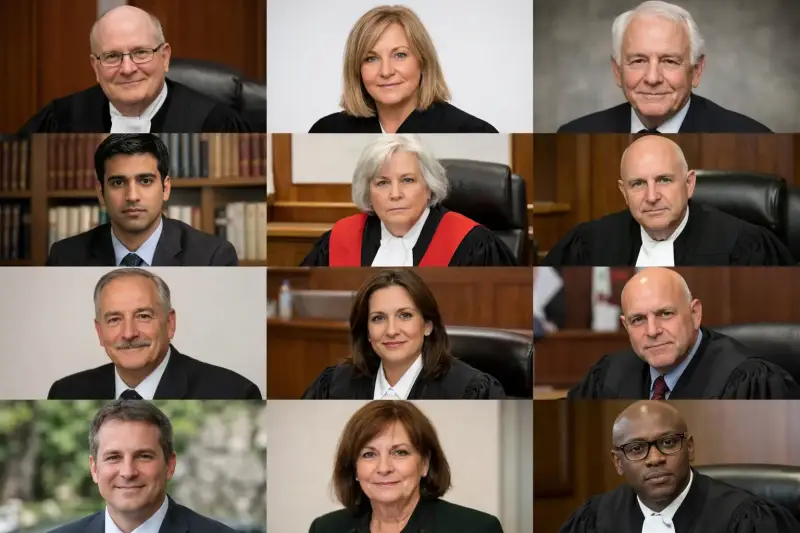
"I understand judicial independence," he says. "What I don't understand is total impunity."
Martin's case is not exceptional. In Quebec, as everywhere in Canada, judges benefit from near-absolute functional immunity. This principle, inherited from the Anglo-Saxon legal tradition, is designed to protect the independence of the judiciary. But in practice, it creates a class of decision-makers that nothing — or almost nothing — can hold to account.
A Legal Shield That Is Nearly Impenetrable
Under Quebec law, judges enjoy very broad judicial immunity. In practice, holding them personally liable for acts committed in the exercise of their functions is extraordinarily difficult. As Professor Mariève Lacroix summarizes in the Revue générale de droit, Quebec maintains, in the Anglo-Saxon tradition, a near-absolute judicial immunity.
"Proving a judge's bad faith is like having to prove they deliberately wanted to harm you," explains a lawyer specializing in administrative law. "A serious mistake — even a monumental one — is not enough. The law protects a judge who errs in good faith, even if that error destroys a family, ruins a business, or sends someone to prison."
The same professor notes that this conception is increasingly the subject of contemporary debate regarding the amendments it should undergo.
The Judicial Council: 90% of Complaints Rejected
In theory, citizens have a recourse: filing a complaint with the Conseil de la magistrature du Québec. This body, created in 1978, is responsible for overseeing the conduct of judges of the Court of Quebec and municipal courts. In practice, the numbers speak for themselves.
From its creation until 1999, the Council received 799 complaints. Of these, 716 were deemed unfounded — nearly 90% — 13 became moot, and in only 70 cases did the Council decide to conduct an inquiry. According to an investigative report by the Journal de Montréal Bureau d'enquête published on March 12, 2026, the Council received 128 complaints in 2025. Only six were retained for investigation.
And in the rare cases where a complaint leads to an inquiry and a fault is confirmed, only two sanctions are possible: a reprimand — a kind of formal rebuke — or a recommendation for removal from office. The latter remains exceptional.
It is precisely this gap that Chief Justice Henri Richard, head of the Court of Quebec and president of the Judicial Council, publicly lamented in an interview given on March 12, 2026: "The difficulty we face is that there is a gulf between a reprimand and a recommendation for removal. Because we can agree that removal is the death sentence for a judge's career."
In Ontario, according to Henri Richard himself in that same interview, the disciplinary toolkit is far broader: a warning, an obligation to apologize, mandatory training, suspension with or without pay for up to 30 days, and removal. "In Ontario, you can ask a judge to undergo therapy. You can ask a judge to undergo training. Whereas in Quebec, we unfortunately don't have that power in terms of sanctions," he explained. The Quebec Judicial Council requested a similar expansion from the Ministry of Justice in the fall of 2024. Since then — silence.
But the most fundamental problem remains structural: the Council cannot modify a judgment or order a new trial. It cannot order a judge to compensate the person they have harmed. Its mandate is limited to determining whether there was a breach of ethics — a concept quite distinct from judicial error. In other words, a judge can render a profoundly unjust decision without technically having violated their code of conduct.
Added to this is the fact that identifying information is confidential at the complaint examination stage. In the vast majority of cases, the public does not know which judge was the subject of a complaint, or for what reasons.
Quebec and Public Inquiries Into Wrongful Convictions: A Gap to Fill
The following fact deserves emphasis: unlike several other Canadian provinces, Quebec has never held a major public inquiry into a wrongful conviction comparable to the Marshall, Morin, Sophonow, or Milgaard inquiries. Ontario examined the cases of Guy Paul Morin and Charles Smith. Nova Scotia conducted a public inquiry into Donald Marshall Jr., who spent 11 years in prison for a crime he did not commit. Manitoba examined the Sophonow case.
In Quebec: nothing.
According to observers of the system, some cases are met with refusals to proceed because they raise issues implicating police officers, Crown prosecutors, potentially judges, and senior officials at the Ministry of Justice. This absence of institutional introspection is, for many, a sign of a system that prefers to protect its own rather than be accountable to those it serves.
People who have been exonerated following wrongful convictions have repeatedly expressed their frustration at the lack of accountability among the system's actors who contributed to their situation. A federal commission consulted in 2021 clearly noted this frustration: these individuals demand answers — and never receive them.
Independence or Impunity?
Defenders of the current system put forward a serious argument: a judge who fears personal lawsuits cannot dispense justice freely. If every unpopular decision risks ending up in civil court, magistrates might be tempted to render "safe" decisions rather than just ones. This is the classic argument in favour of immunity, and it is not without merit.
But this reasoning has its limits. As Professor H. Patrick Glenn noted in an analysis published at McGill University: no functional immunity should be absolute. Judicial independence cannot exclude all civil, criminal, or disciplinary liability for abuse of power. The problem is not to make judges personally responsible for every erroneous decision — that is where the appeals process plays its role — but to establish credible mechanisms for problematic conduct and systemic errors.
France allows the State to be condemned for the malfunction of the public justice service, opening at least a path to compensation for victims. In Quebec, even this door is narrow: compensating victims of judicial errors involves a long and restrictive process, primarily limited to wrongful criminal convictions, and one that never touches the judge's personal responsibility.
What Reformers Are Calling For
No one is proposing to leave judges at the mercy of disgruntled litigants. But many voices — academic lawyers, rights organizations, former judges themselves — are calling for serious reflection on four points.
Greater transparency from the Judicial Council: the names of judges subject to sustained complaints should be made public, as is the case for members of other regulated professions.
A public inquiry into judicial errors in Quebec: as other provinces have done, to understand systemic factors and prevent recurrence.
An expanded compensation mechanism: one that is not limited to wrongful criminal convictions, but also covers victims of civil or family decisions based on serious errors.
A periodic review of judges' competency: not to penalize errors in judgment, but to ensure that magistrates maintain their training in rapidly evolving areas — particularly the realities of persons with disabilities, neurodivergent individuals, and unrepresented litigants.
A Debate That Is Just Beginning
Judicial independence is a pillar of democracy. Without it, judges would become instruments of political power. But independence is not synonymous with an absence of accountability. In a democratic society, all power entails proportional responsibility.
Yet in Quebec, the debate remains confined to law school conference rooms. It has never truly broken into public discourse. Litigants who have been harmed often do not know their recourse — limited as it may be. And judges continue to decide knowing that their errors, however costly to others, will cost nothing to themselves.
That may be the real problem: not immunity itself, but the silence surrounding it.
When the Chief Justice himself breaks that silence — as he did on March 12, 2026 — and the government responds with months of administrative silence, one is entitled to ask who, exactly, this system protects.
Related articles:
Sources: Conseil de la magistrature du Québec — Dictionnaire encyclopédique du droit québécois — Mariève Lacroix, Revue générale de droit, Université d'Ottawa, 2017 — H. Patrick Glenn, McGill University — Department of Justice Canada — Innocence Québec — Journal de Montréal / Bureau d'enquête, Sarah-Maude Lefebvre and Kathryne Lamontagne, March 12, 2026 — J.E., TVA, March 12, 2026 — Articles published on Justice-Quebec.ca
This website does not provide legal advice. The information published is based on verifiable public sources and cited public statements. Justice-Quebec.ca is an independent, non-profit citizen platform.
Ajouter un commentaire
Commentaires
I made a complaint against a Judge in a criminal trial after I received by accident a recording of an ex parte. On the recording you can hear the Judge laughing with the prosecutor. He also prepared a misrepresentation to tell the defence lawyer and his client. The Conseil dismissed the complaint stating they were not allowed to listen to the recording! 2024-CMQC-124
Thank you Jacqueline. We took the time to verify the public registry of the Conseil de la magistrature du Québec. The dossier number you provided — 2024-CMQC-124 — is the only examination report missing from the entire 2024 sequence. Every other number is accounted for. Our team will reach out to you privately. This deserves our full attention. 👏